
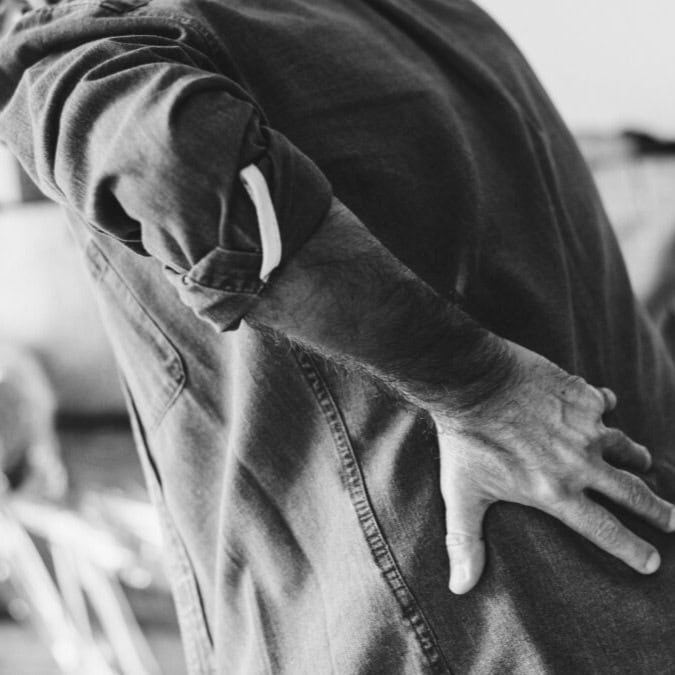
Understanding one of the most common forms of back pain
Non-specific low back pain refers to pain in the lower back where no specific structural cause can be clearly identified.
It is one of the most common reasons people seek healthcare; it affects millions of people worldwide and, at some point in life, most of us will experience an episode of non-specific lower back pain.
Despite its name, "non-specific" does not mean that the pain isn't real or that there is no explanation for it. Rather, it means that no single structural cause, such as a fracture, infection, inflammatory condition or serious underlying disease, has been identified.
For many people, this uncertainty can be both frustrating and frightening. Without a clear diagnosis, it's natural to wonder what the future holds. Some people have watched family members or friends struggle with long-term back pain and worry they may be heading down the same path. Others fear that movement will make things worse or that they'll never return to the activities they enjoy.
Understanding what non-specific low back pain does—and doesn't—mean is often the first step towards reducing that uncertainty and approaching recovery with greater confidence.
What is non-specific low back pain?
Most episodes of low back pain are classified as non-specific.
This means that while the symptoms are very real, they cannot be attributed to one clearly identifiable physical cause. Modern healthcare increasingly recognises that pain is rarely explained by anatomy alone. Instead, it reflects the interaction of many different influences within the body and nervous system.
For most people, a first episode improves within a few weeks with reassurance, gentle movement and a gradual return to normal activities. However, some people experience recurring episodes or persistent pain, highlighting that recovery is often more complex than simply allowing tissues to heal.
Current understanding
Our understanding of back pain has evolved considerably over recent decades.
While muscles, joints, discs and other spinal structures can contribute to symptoms, researchers now recognise that pain is influenced by a wide range of physical, psychological and social factors. These include previous experiences, lifestyle, stress, sleep, movement habits, general health and the way the nervous system processes information.
This broader understanding has led to a shift away from searching for a single "cause" towards understanding the whole person and the wider context in which pain occurs.
Looking beyond symptoms
One of the questions I often ask is:
"What if the pain is not simply something to eliminate, but something to understand?"
Pain is the body's way of drawing our attention to something that requires care. Sometimes that relates to physical overload or injury. At other times it may reflect the cumulative effects of stress, reduced movement, lifestyle pressures, or other factors that influence how the body functions as an integrated whole.
Rather than viewing the spine as an isolated mechanical structure, an integrative approach invites us to consider how the body continually adapts to our internal and external environment.
This doesn't replace conventional healthcare; it complements it by encouraging a broader understanding of health and recovery.
An integrative perspective
Over more than four decades in clinical practice and over a decade developing the Buttafly Technique, my understanding of back pain has changed considerably.
Repeatedly observing changes in posture and spinal alignment challenged my previous assumptions about how the body works. Rather than seeing the spine simply as something to correct, I began exploring the possibility that the body has an inherent capacity to move towards balance when the conditions are right.
This perspective has shaped the way I now think about spine health.
It encourages curiosity rather than fear, self-awareness rather than dependence, and an appreciation that lasting change often involves understanding the whole person rather than focusing solely on symptoms.
The Buttafly Technique
The Buttafly Technique was developed through years of clinical observation and exploration.
The Buttafly Technique does not seek to correct the body from the outside. Instead, it creates the conditions in which the body can begin to restore balance from within.
Many people notice changes in comfort, posture or movement during the process. Others describe a growing awareness of how their body responds to stress, movement and everyday life.
While everyone's experience is unique, the Technique offers a gentle, practical way to explore your relationship with your spine and support your long-term spine health.
Continuing your journey
Understanding non-specific low back pain is often the first step towards approaching it with greater confidence.
If you'd like to explore this topic further, you may also be interested in:
Looking for personalised support?
If you're experiencing non-specific low back pain and would value a more individual approach, I'd be delighted to help. I offer both online and in-person consultations, creating space to explore your symptoms within the wider context of your health, lifestyle and personal experience.
About the author
Loulou James, MCSP is the founder of the Buttafly and the Buttafly Technique, and an Integrative Spine Health Practitioner with more than four decades of clinical experience.
Her work combines yoga, clinical observation and an integrative understanding of spine health, helping people explore the body's remarkable capacity to restore balance when the conditions are right.

The body has a deep intelligence and the capacity to bring itself back into balance. While we readily recognise this in many areas of health, we rarely apply the same thinking to the spine and posture. My experience suggests that this principle does apply—and the Buttafly Technique harnesses it beautifully.
— Loulou James, MCSP
Founder of the Buttafly Technique and Integrative Spine Health Practitioner