
A more supported way to sit
This page offers guidance to help you understand how the Buttafly supports seated meditation, how to sit on it well and how to choose the right one for your body.
A well-aligned sitting position also supports pranayama, allowing space for the diaphragm to move freely and encouraging the natural reciprocal movement of the pelvic floor.
The same principles of support and alignment apply whether you are using the Buttafly on the floor or on a chair. If you’re looking for support on a chair rather than the floor, please visit our page for Chair Yoga.
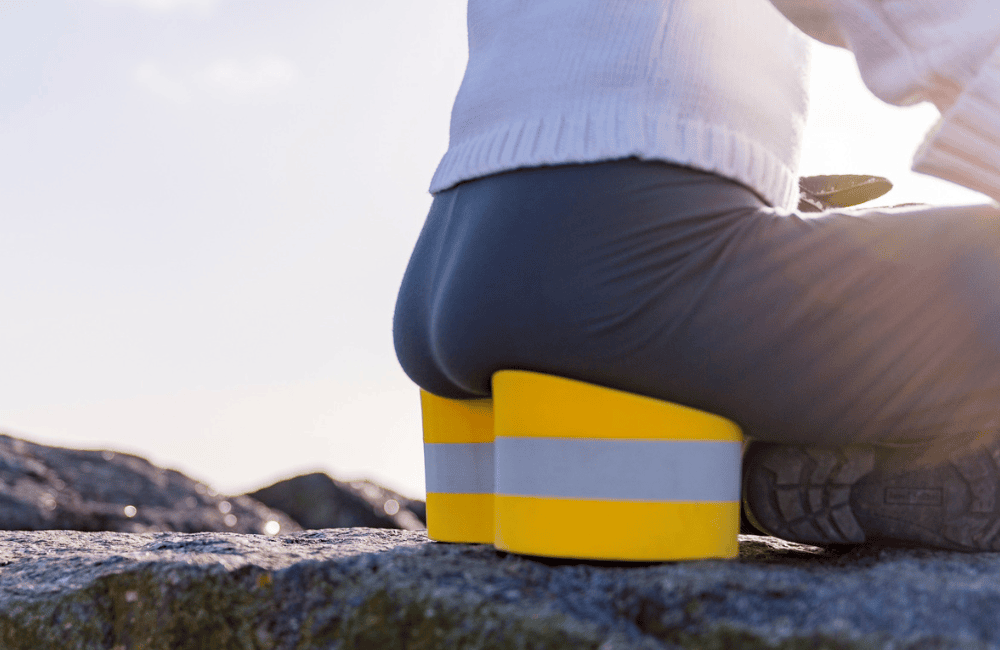
Foundations for well-supported seated meditation
A comfortable seat can change the whole experience of meditation. With the right support, sitting becomes less about managing the body and more about allowing your attention to settle.
Support for the pelvis
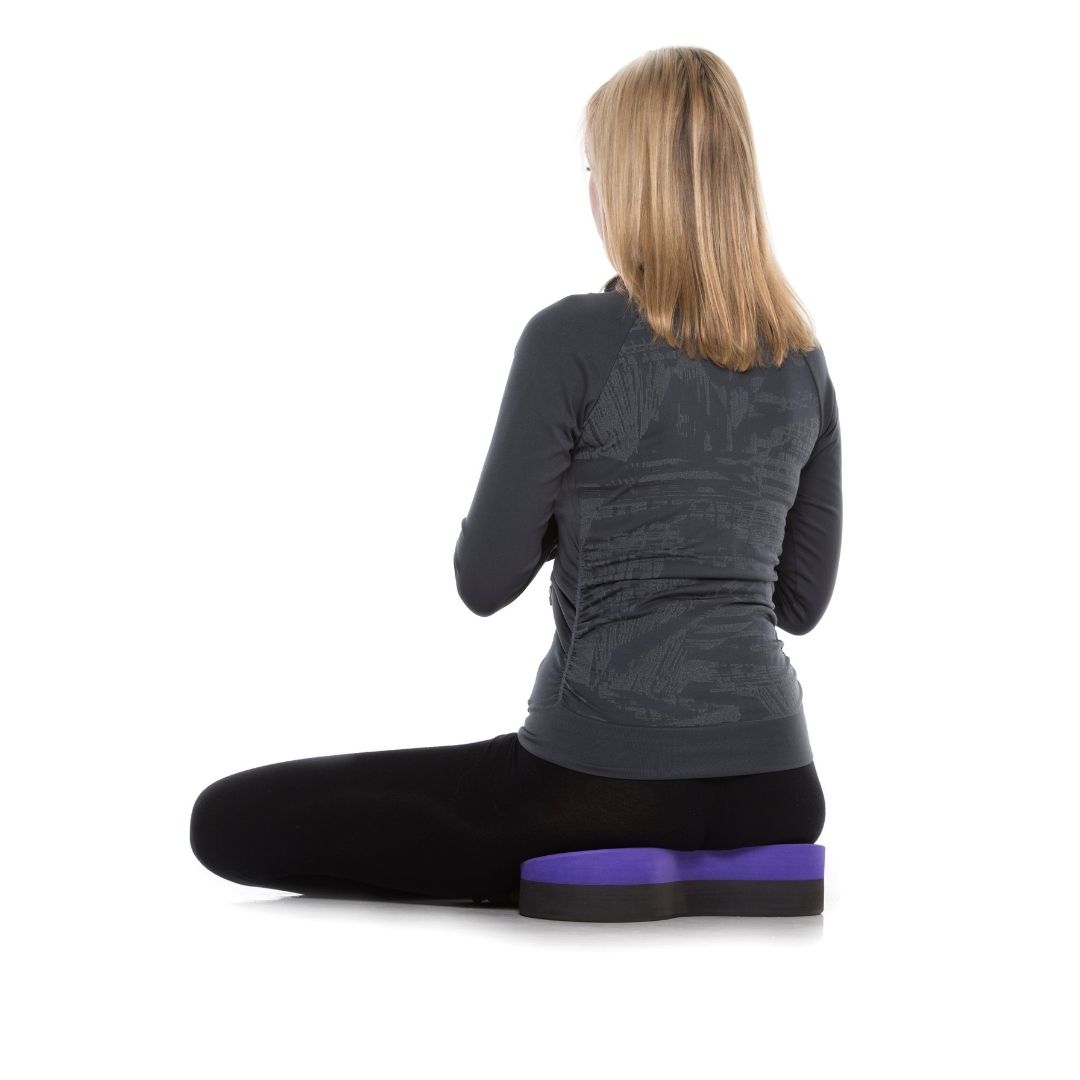
The angled surface of the Buttafly provides the ideal support for the sitting bones for you to establish a neutral pelvis. You may best sense this neutral position when you feel that your bottom is neither sticking out, nor tucked under.
A natural base for the spine
When the sitting bones are well positioned, the pelvis provides a stable base from which the spine can rise naturally.
From here, the spine can organise itself with its gentle lumbar curve in place, length through the mid back and neck, and the head resting in comfortable balance. The shoulders can soften and the breath can move with ease.
Relief for the coccyx
The rear groove of the Buttafly is designed to off-load pressure on and around the coccyx (tailbone)
When sitting on a firm surface with a neutral pelvis, the coccyx (tailbone) is not weight-bearing, as it sits higher in the body than the sitting bones.
However, when sitting on a cushion or zafu, even with a neutral pelvis, the sitting bones sink into the fabric, and the soft tissue of the buttocks is held up against the coccyx, creating pressure in this area. This can be uncomfortable, especially for anyone with sensitivity here.
When sitting on the Buttafly, the rear groove allows the soft tissue of the buttocks to fall away rather than being held up against the coccyx, helping avoid direct pressure on the coccyx and pressure being transferred through the base of the spine.
Although small, the coccyx plays an important role in the body’s wider lumbosacral and pelvic relationships. Pressure in this area can affect comfort in sitting and influence the sense of ease through the base of the spine and pelvis.
Space for ankles and feet
The front indent of the Buttafly creates space for the ankles and feet for those who prefer to draw them in close to the body when sitting. Without enough space at the front of the seat, this position can feel compressed or difficult to sustain.
The front indent also makes it easier to draw a heel in towards the perineum. Applying pressure between the heel and the perineum during meditation is a key feature of Siddhasana (Accomplished Pose or Adept's Pose), a traditional seated posture designed to promote stability, channel energy (prana), and facilitate deep concentration.
This is a tooltip
What’s the difference between sitting on the Buttafly and a regular yoga block?
This short animation shows how pelvic position changes when sitting on a regular yoga block compared with the Buttafly, and how this influences the spine’s natural curves.
How to sit well on the Buttafly
For some people, the shape of the Buttafly supports an immediate sense of alignment. Others need a little more guidance. In this short video, Loulou James shows how to find a comfortable, well-aligned sitting position.
How to choose your Buttafly for cross-legged floor sitting

When you sit cross-legged without any support, if your knees rest level with the hips, the Standard Buttafly is the most appropriate choice for you.

When you sit cross-legged without any support, if your knees rest higher than the hips as shown here, the Tall Buttafly is the most appropriate choice for you.

When you sit cross-legged without any support, if your knees rest far higher than the hips, as shown here, the Tall + Flat Buttafly stacked together is the most appropriate choice for you. For comfort, stack the Tall on top.
Step-by-Step guide to sitting on the Buttafly
Step 1

Sit on the Buttafly with your legs out straight.
Step 2
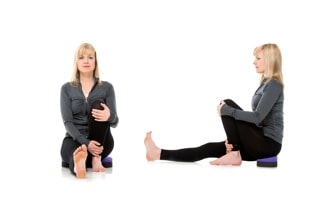
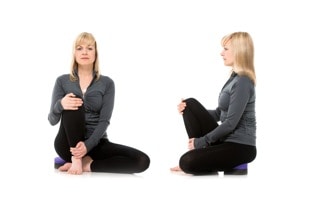
Bend one knee, sliding your foot along the mat; wrap both hands around the shin to gently bring the heel as close as you can towards your bottom. This helps protect your knee.
Step 3
Use your hands to support the knee and ankle as you turn your hip to bring your leg into the cross-legged position.
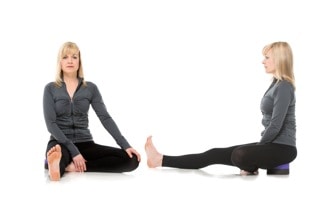
Step 4
Repeat with the other leg to come into a beautifully aligned sitting pose.
Step 5
Breathe into your belly and SMILE!
