
The Buttafly was not so much an idea for a product as an ideal: that people everywhere might be able to sit comfortably enough to experience the benefits of meditation, yoga and embodied awareness.
— Loulou James, MCSP, founder of the Buttafly and the Buttafly Technique
I have called this page Our Story because the story of the Buttafly is inseparable from my own. What began as a simple wish to help people sit more comfortably for yoga and meditation gradually became a much deeper exploration of posture, spine health and the body's capacity to respond when given the right support.
During my yoga teacher training, I became increasingly aware of a common problem. Many people wanted to meditate sitting on the floor, yet struggled to find a comfortable position for long enough to settle their body and mind. I was one of them.
Rather than focusing on my breath, I often found myself mentally exploring ways to create better support for the pelvis and spine. The idea kept returning during meditation, gradually taking shape until it became what is now known as the Buttafly.
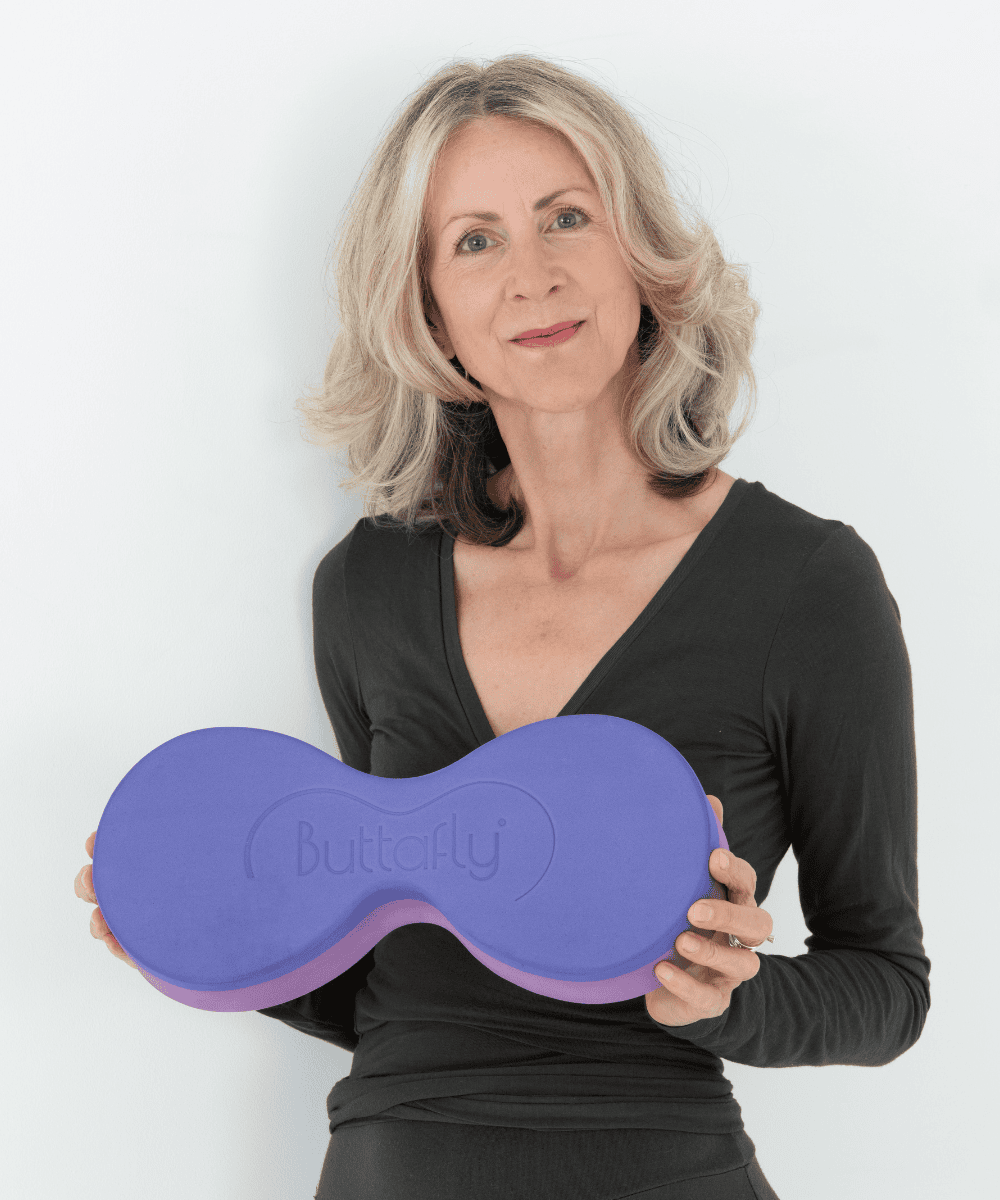
Originally designed as a meditation seat and yoga prop, the Buttafly was created to support the body's natural curves and make sitting on the floor feel more comfortable and sustainable. At the time, I thought that was its purpose.
I had no idea it would lead somewhere entirely unexpected.
Soon after the first shipment of Buttaflys arrived, I was lying on my yoga mat with one nearby. Although a decade had passed since fracturing my sacrum, I still found it difficult to lie comfortably on my back. The way the fracture had healed left a prominent area of bone that remained sensitive to pressure.
I often joke that I felt like the princess in The Princess and the Pea. No matter how many yoga mats I stacked beneath me, I could never quite get comfortable.
As I lay there, I looked at the Buttafly and realised that its shape might fit beneath my pelvis like a jigsaw piece, allowing my sacrum and tailbone to rest within the central indentation rather than pressing directly against the floor.
I tried it.
For the first time in ten years, I could lie comfortably on my back on the floor.
As my body relaxed around the support, I entered a deeply restful state. More importantly, I began to notice changes that sparked my professional curiosity. What was happening? Why did this feel so different? What was the body doing when the pelvis and spine were supported in this way?
Those questions stayed with me.
By then, I had spent more than three decades working as a physiotherapist across the NHS, private practice, military rehabilitation and international teaching settings. Throughout my career, I had been fascinated by posture, movement and the remarkable adaptability of the human body. My own experience prompted me to look again, through both personal and professional eyes, at how the spine and pelvis respond when strain is reduced and support is introduced.
Over time, those observations developed into what is now known as the Buttafly Technique — a gentle method that uses the Standard Buttafly to support the pelvis and facilitate a natural release and unwinding through the spine.
The Buttafly Technique continues to help me feel more grounded, balanced and at ease in my own body. More importantly, it has allowed me to witness similar changes in many others.
Looking back, I can see that the original ideal remains the same, but its expression has become fuller. What began with the wish to help people sit more comfortably is now a wider body of work rooted in natural spine health, embodiment and the body’s own capacity to reorganise and rebalance itself.
This is the heart of the Buttafly.
Today, the Buttafly includes the original prop, the Buttafly Technique, practitioner training and a growing body of education designed to help people care for their spine in a gentle, practical and sustainable way. It supports meditation, yoga, back care and everyday well-being, while also opening a wider conversation about how we sit, move and live in our bodies.
The recent endorsement of the Buttafly Technique by CIMSPA (Chartered Institute for the Management of Sports and Physical Activity) marks the beginning of an exciting new chapter. My hope is that more healthcare professionals, movement practitioners and fitness professionals will come to understand, explore and apply this work in ways that benefit the people they serve.
Thank you for being part of the journey.
May your spine be aligned, your body at ease, and your spirit soar with vitality.


Loulou James, MCSP, Integrative Spine Health Practitioner, working with a client who has Multiple Sclerosis.
Gentle and adaptable, the Buttafly Technique has grown through decades of clinical practice, personal healing and a deep respect for the body’s capacity to respond when given the right support.