
A more supported way to sit
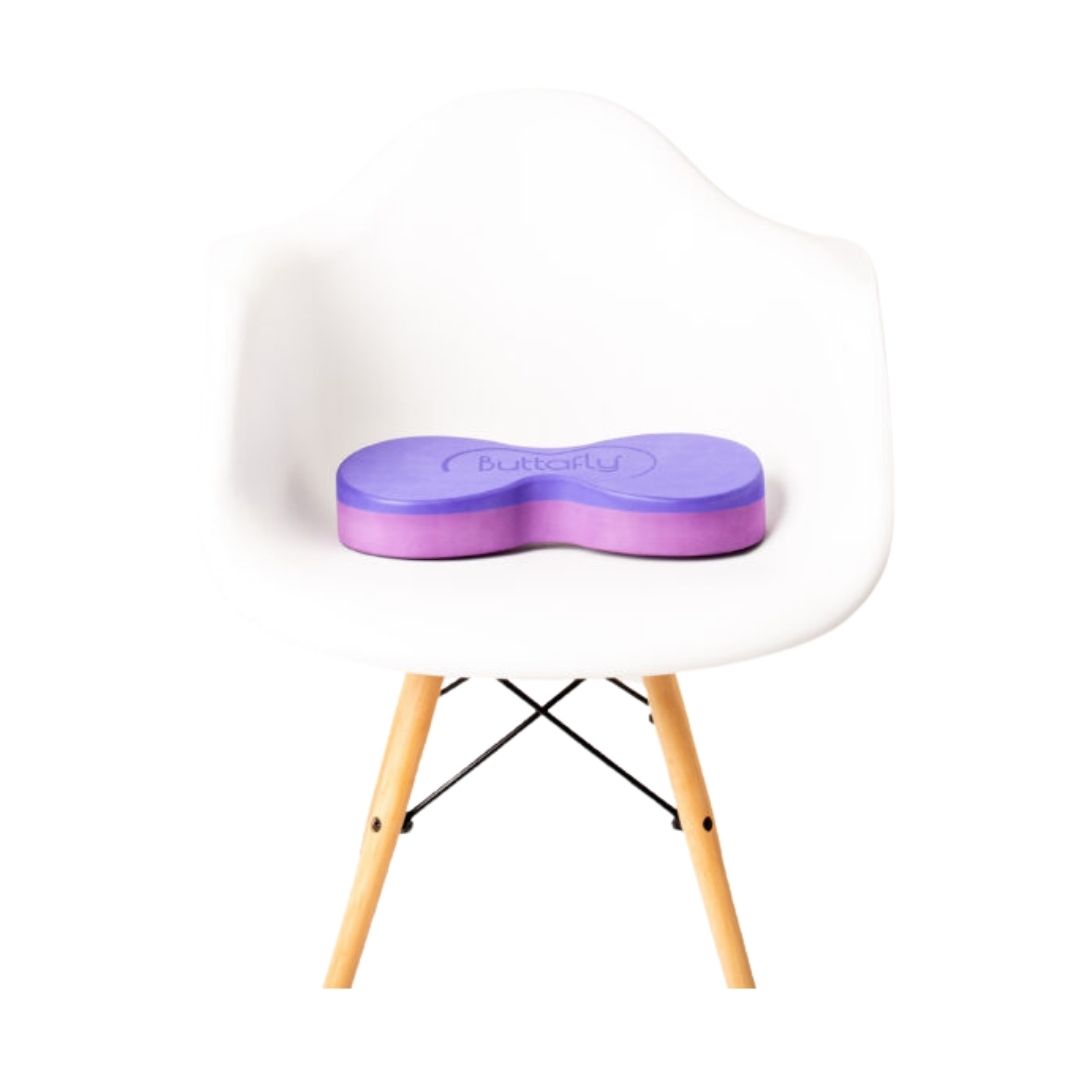
This page offers guidance to help you understand how the Standard Buttafly can support chair yoga, meditation and other seated practices on a flat-seated chair.
The same principles of support apply whether you are using the Buttafly on the floor or on a chair.
When the pelvis is well supported, the spine is better able to organise itself naturally, allowing more ease in sitting and more freedom for the breath.

How the Buttafly supports chair yoga
A flat chair seat may be firm, but it is not shaped to support the pelvis in a balanced sitting position. With the right support, sitting becomes more stable, allowing greater freedom of movement through the upper limbs, head, neck and upper trunk. In this way, stability and freedom work together.
Support for the pelvis on a chair
On a regular flat-seated chair, the hips and knees often rest at a similar level. This tends to encourage a posterior pelvic tilt, making it harder to maintain the natural lumbar curve and a well-aligned sitting posture.
When the Standard Buttafly is placed on a flat-seated chair, two aspects of its design help support a more neutral pelvis:
- The additional height raises the hips above the knees;
- The angled surface supports the sitting bones in a way that further encourages this position. You may best sense it when your bottom feels neither tucked under nor sticking out.
A natural base for the spine
When the pelvis is well-positioned, it provides a more supportive base from which the spine can rise naturally.
From here, the spine is better able to maintain its gentle lumbar curve, with length through the mid-back and neck and the head resting in comfortable balance. The shoulders can soften, and the breath can move with less restriction.
Chair yoga with the Buttafly and neurological conditions
When the pelvis and spine are better aligned in sitting, the body is more able to access its deeper postural support from within. This includes the natural engagement of the core stability muscles, helping to build postural strength over time.
This is especially important for those who tend to rely heavily on the back of a chair for support, including many older adults and people with reduced mobility. With the right support beneath the pelvis, sitting can become more upright, more active and less dependent on external support.
When stability is compromised, the body often braces in order to hold itself.
This bracing is not a fault. It is one of the body's many intelligent strategies for creating a sense of safety.
When the pelvis is better supported, some of that effort can begin to soften. Breathing may become easier. Movement may feel less restricted. Sitting can become a more active and enjoyable experience.
With better support, that bracing can soften, allowing greater ease, freedom of movement and expression.
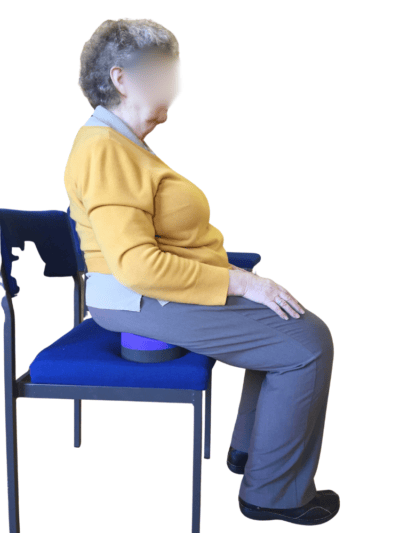
Chair yoga with the Buttafly for a lady with Multiple Sclerosis
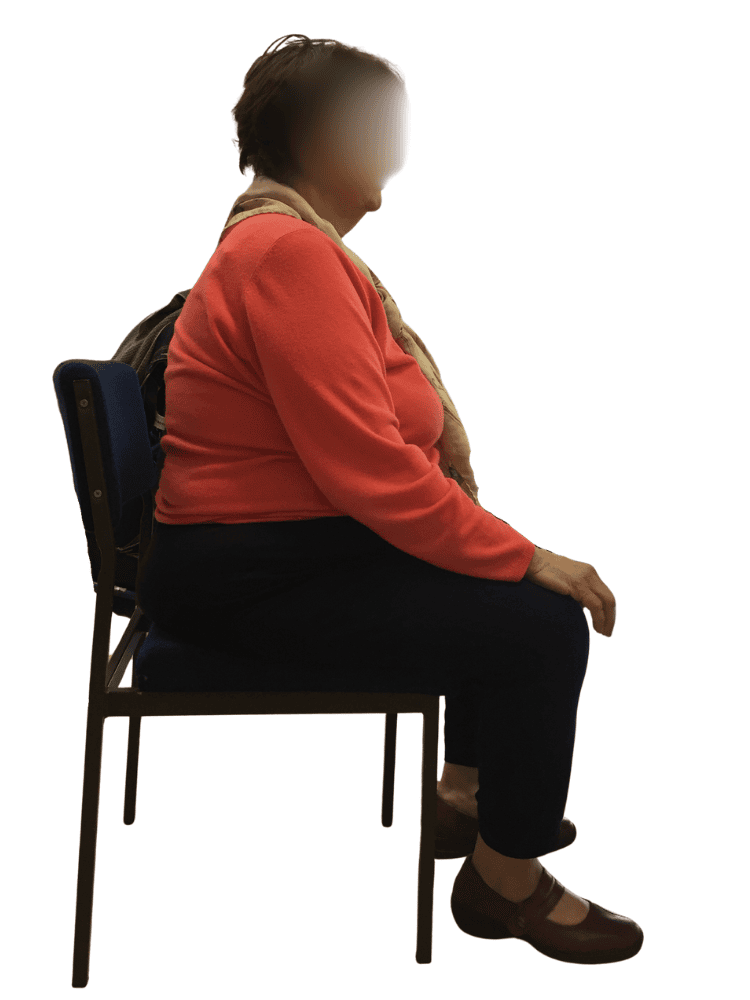
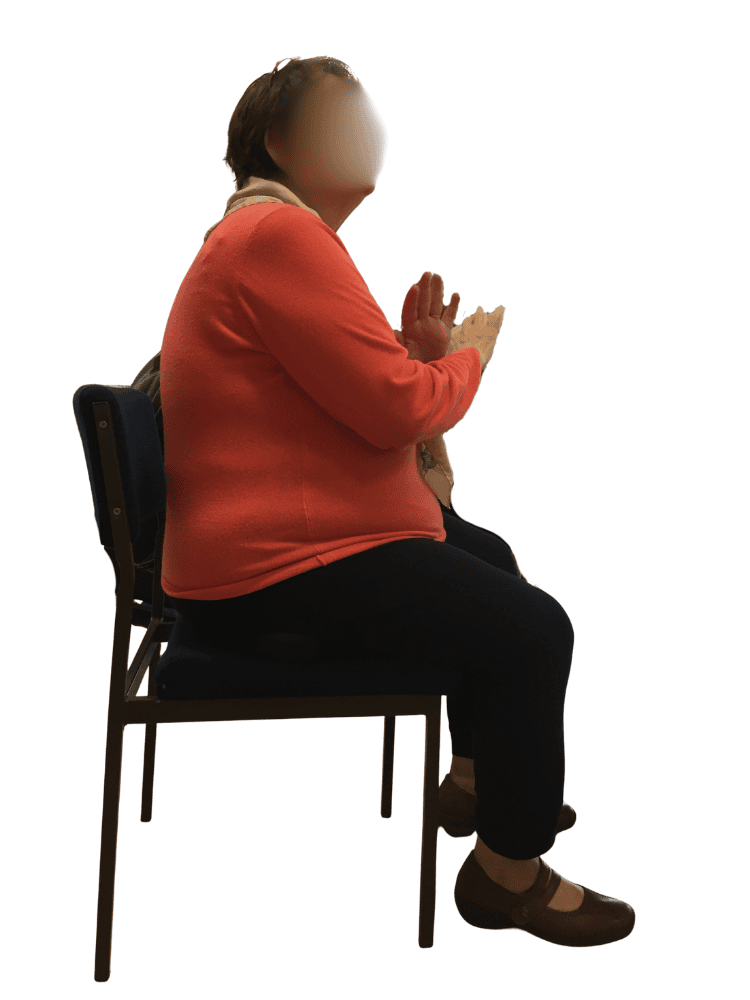
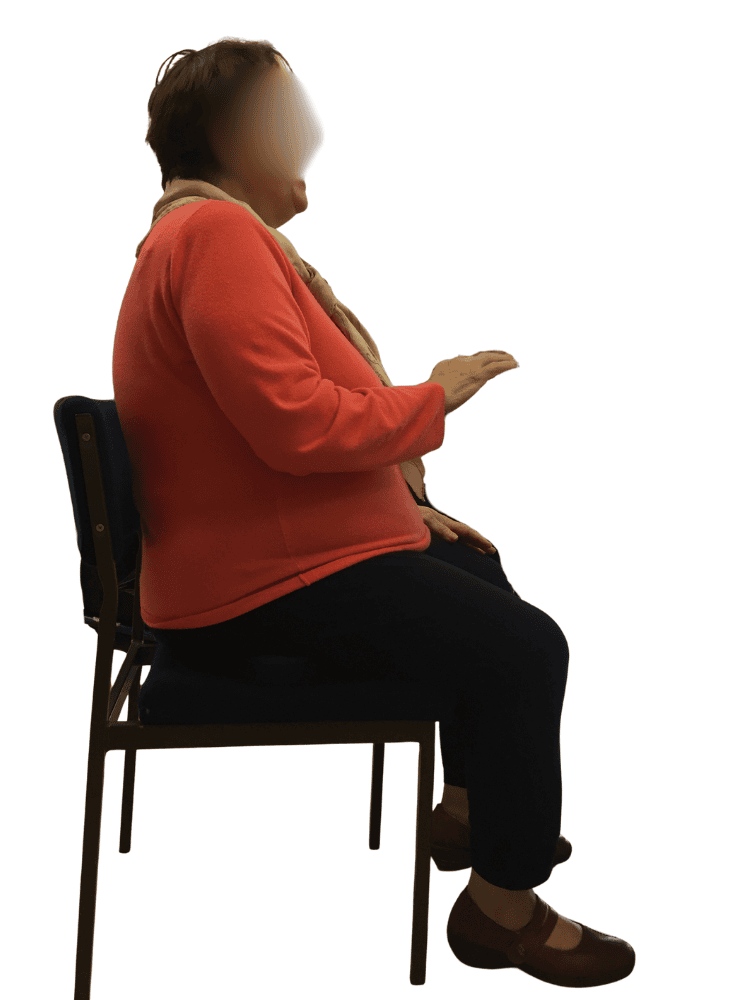
Many people living with Multiple Sclerosis experience challenges with sitting balance, coordination and fatigue. The Buttafly may help create a more supportive sitting environment from which movement can be explored with greater confidence.
In this case of this lady, the photographs demonstrate the differences that the right support can make.
Without the Buttafly (left), she leans slightly forwards for stability and keeps her hands resting on her thighs.
With the Buttafly (middle and right), her posture appears more upright and supported, and her whole demeanour becomes more animated.
Those living with Parkinson's disease, recovering from a stroke, or experiencing other balance-related challenges may also find the Buttafly helpful as part of a seated movement, rehabilitation or wellbeing programme. Individual needs vary, and professional guidance should always be sought where appropriate.
Further Reading
Interested in how the Buttafly was used during a seated yoga class for people living with Multiple Sclerosis?
Read: Seated Yoga and Sitting Balance: How the Buttafly Can Help
Ready to choose your Standard Buttafly? Shop now