January 9, 2026
Tight Hips? Start With Your Spine
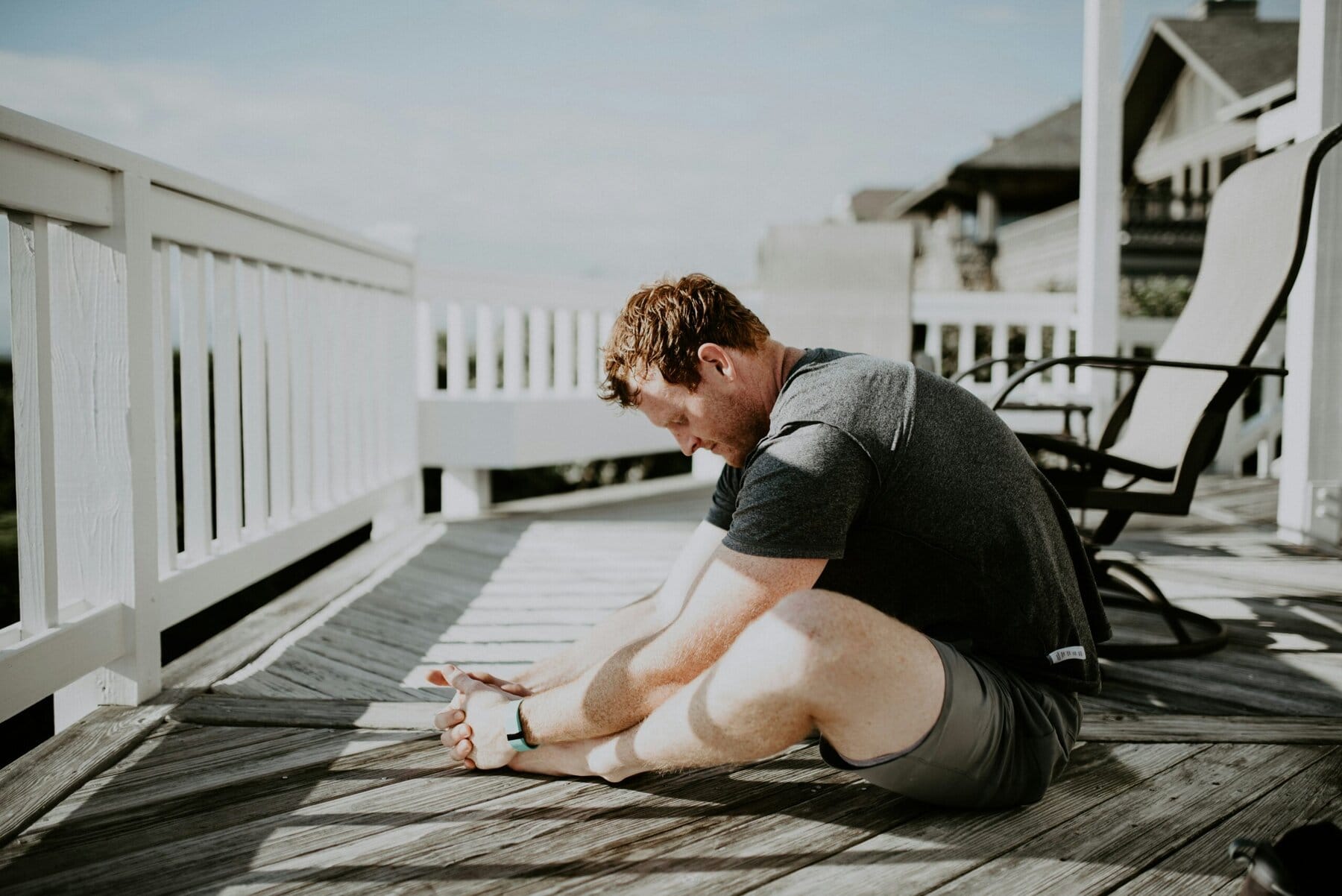
Many people tell me they can’t sit cross-legged because their hips are too tight.
Sometimes that’s true. However, often what feels like a hip problem is actually a whole-body pattern that manifests most noticeably in the pelvis and hips.
Because when the spine releases and realigns, the pelvis often finds its way back to neutral — and the hips open naturally as a result.
A story from the early days
In the early days of sharing the Buttafly, I used to exhibit at events like the OM Yoga Show and the Mind, Body, Spirit Festival. Back then, the planned focus was to demonstrate the Buttafly as a yoga block and meditation seat.
People would walk up to the stand and say things like:
- “I’d love to meditate, but I can’t sit cross-legged.”
- “My hips are so tight.”
- “Squatting is beyond me — I fall over!”
Having discovered the benefits of the Buttafly Technique in my own body — specifically for my pelvis — I’d invite them to lie down, and I would set them up with a Standard Buttafly under their pelvis.
And something fascinating would happen.
Within about 4–5 minutes, many people would experience a clear release through their spine. When I removed the Buttafly, often their eyes would fly open and they would exclaim, “My lower back is touching the ground — it’s never felt like that.”
Then they’d sit up.
And the carry-on effect through the pelvis and hips was immediately noticeable: they could come into a cross-legged sitting position much more comfortably than they could just moments before. One lady’s knees were a full six inches closer to the ground.
Not because we “stretched the hips”.
But because the body reorganised itself from the centre.
Why “tight hips” aren’t always a hip problem
Your hips don’t live in isolation. They’re part of a system.
The pelvis is the meeting point between your spine and your legs. If the spine is holding tension — especially around the lower back, sacrum, and deep postural muscles — the pelvis has to adapt.
And when the pelvis adapts, the hips adapt.
That can look like:
- Difficulty sitting cross-legged
- A sense of pinching at the front of the hips
- Feeling “stuck” in the groins
- One hip that always feels tighter than the other
- A pelvis that feels tipped forward or tucked under
In plain English, if the spine can’t settle, the hips can’t settle either.
The missing piece: the nervous system
Another thing I noticed at those early events was that the release wasn’t always purely physical.
Sometimes, as the spine let go, there would be an outpouring of emotion — often quite cathartic.
At the time, I didn’t fully understand what was happening.
Later, as my understanding deepened, it became clear: when we help the body feel safe enough to release long-held tension patterns, we’re not only working with muscles and joints.
We’re also working with the nervous system.
And the nervous system doesn’t separate “physical” from “emotional” in the way we often try to.
Why I stopped demonstrating the Buttafly Technique in busy spaces
Once I realised the depth of what could unfold, it no longer sat comfortably with me to demonstrate the Buttafly Technique in a noisy, busy exhibition atmosphere.
Not because anything was wrong with what was happening, but because I realised a quick demonstration can become an opportunity lost.
The Technique is at its best when it’s unhurried: when the body can soften, the nervous system can reset, and the change can land, not just happen.
It works best when you give your body the conditions it needs:
- A calm environment
- Clear guidance and consent
- Time to settle
- Space for whatever the body and mind needs to do
When we slow it down like this, the benefits tend to deepen.
Yes, people often notice more ease through the pelvis and hips.
But they also tend to feel more settled overall — the kind of grounded relaxation you can take with you into whatever comes next, whether that’s yoga practice, meditation, a walk, or simply the rest of your evening.
As a result, people’s releases are often much more gentle.
Still powerful — but kinder, steadier, and more integrated.
What this means if you want to sit cross-legged
If your aim is to sit cross-legged for yoga or meditation, it can be tempting to go straight to hip stretches.
But there’s another approach that many people find more sustainable:
- Help the spine unwind and realign naturally
- Let the pelvis find a more neutral, balanced position
- Allow the hips to open as a result — without forcing
A note for desk workers and drivers
This isn’t only about yoga.
If you sit for long hours — at a desk, in meetings, or in a car — your body is being asked to hold a shape for a long time.
Over time, many people notice:
- hips that feel tight or compressed
- a lower back that feels stiff
- a pelvis that feels “locked”
- discomfort when standing up after sitting
This is exactly where a gentle, non-invasive practice that supports natural spine alignment can be so valuable.
Think of it as daily hygiene for your spine and pelvis — not a big workout, not a dramatic intervention, just a consistent way to help your system reset.
If you’re exploring this, start gently
If you’re new to the Buttafly Technique, the most important thing is to learn it properly and practise in a way that feels safe and comfortable for your body.
- You don’t need to force your hips open
- You don’t need to push through
You’re inviting the body to unwind… So, if you’ve been telling yourself your hips are too tight, be reassured, you’re not broken, and you’re not failing at yoga.
If you’d like to explore the Buttafly Technique in a more supported way, you’re welcome to book a 1:1 online consultation.

Loulou James | Founder of the Buttafly
Reflections from my work in natural back care and embodied spine health
May your spine be aligned, your body be at ease, and your spirit soar with vitality.