
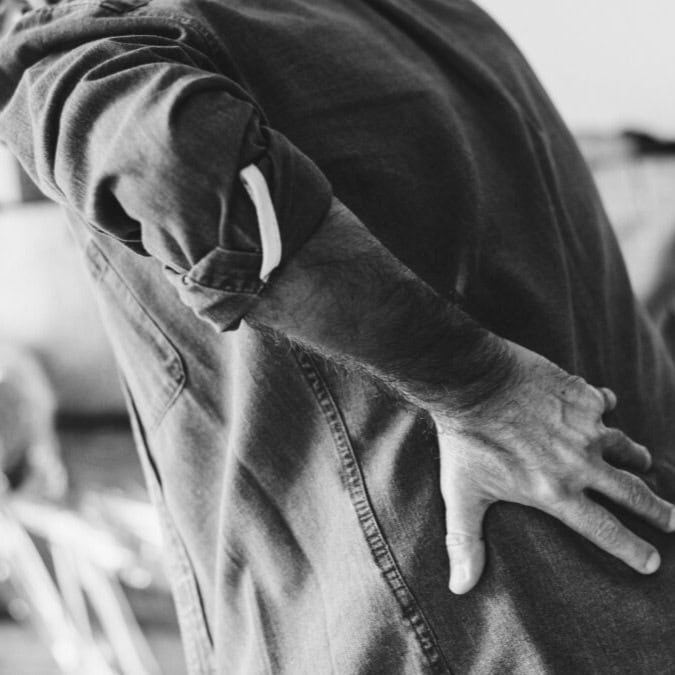
Why does back pain keep coming back?
The answer isn't as straightforward as people would like.
Chronic low back pain is one of the most common and challenging health conditions experienced worldwide.
Unlike acute pain, which is often associated with a specific event and settles as the body recovers, chronic low back pain persists or recurs over time. It can affect movement, confidence, sleep, work, relationships and the activities that bring meaning and enjoyment to everyday life.
For many people, the greatest challenge is not only the pain itself, but the uncertainty that comes with it.
Questions such as these are common experiences for people living with persistent back pain:
Why has my back not recovered?
Why does my back pain keep coming back?
Is my posture causing my back pain?
Will my back ever be normal again?
Understanding why pain can continue is often the first step towards approaching it with greater confidence and a broader perspective.
What is chronic low back pain?
Chronic low back pain is generally defined as pain that persists or recurs for longer than three months.
This does not necessarily mean that there is ongoing damage within the spine.
While injuries, degenerative changes and physical factors can contribute to pain, many people experience persistent symptoms without a clear structural explanation. This is one of the reasons chronic low back pain can feel so complex and frustrating.
Modern healthcare increasingly recognises that chronic pain is not simply a reflection of what is happening in the tissues. Instead, it involves a dynamic interaction between the body, nervous system, experiences, environment and many other influences.
Current understanding
For many years, back pain was often approached primarily through a mechanical model — looking for a specific structure that could explain the symptoms.
While anatomy remains important, our understanding has expanded.
Current approaches recognise that pain is influenced by a combination of factors, including:
physical capacity and movement patterns
previous injuries and experiences
nervous system sensitivity
sleep and recovery
stress and emotional well-being
beliefs and expectations around pain
lifestyle and environmental influences
This broader understanding does not mean that pain is "all in the mind".
Pain is real.
It means that the experience of pain is created through a complex relationship between the body and the brain, rather than being determined by one factor alone.
Why does back pain become chronic?
Many people experience a familiar pattern:
An episode of back pain begins.
The symptoms improve.
Life gradually returns to normal.
Then, at some point, the pain returns.
Over time, repeated episodes can create uncertainty and concern. People may begin to avoid certain movements or activities because they fear making things worse.
This response is understandable. The body is designed to protect us.
However, when the nervous system repeatedly experiences threat, stress or uncertainty, protective responses can become more sensitive. In some situations, this increased sensitivity may continue even after the original trigger has changed or resolved.
This is one reason why chronic pain often requires a broader approach than simply treating symptoms.
Looking beyond symptoms
When someone has been living with back pain for months or years, it is natural to focus on finding the thing that is “wrong”.
An integrative perspective invites a broader question:
“What factors are influencing the way this person’s whole system is responding?”
Pain is not experienced in isolation. The emotions, thoughts and beliefs that accompany our experiences are deeply connected with the body.
Fear, stress, frustration, uncertainty and a sense of helplessness do not simply sit alongside physical symptoms; they can influence nervous system function, movement patterns, posture, behaviour and the body’s ability to adapt.
This understanding is reflected in both modern approaches to pain and many traditional healing systems, which have long recognised the relationship between emotional experience and physical well-being.
This does not mean pain is imagined, or that a person has created their own symptoms. It means we acknowledge the body as an integrated system, where physical, emotional and mental experiences continually influence one another.
An integrative perspective
Over many years in clinical practice, I have observed that the body is far more adaptable and intelligent than I once appreciated.
The development of the Buttafly Technique challenged my previous understanding of the spine and led me to explore a different question:
What happens when we create the conditions that allow the body to participate in its own process of change?
Rather than viewing the body as something that always requires external correction, my work has increasingly focused on understanding the conditions in which the body appears able to restore balance.
This perspective continues to shape my approach to spine health today.
The Buttafly Technique
The Buttafly Technique grew out of years of clinical observation and exploration.
Rather than seeking to correct the body from the outside, the Technique creates conditions that support the body's own remarkable capacity to restore balance from within.
Many people experience changes in comfort, posture, movement and body awareness through their practice. For some, this may also create an opportunity to explore the wider relationship between physical experience, stress, emotions and overall well-being.
Everyone's experience is unique. The Buttafly Technique is not about promising a quick fix, but about supporting a deeper understanding of the body and its capacity to adapt.
Continuing your journey
Chronic low back pain can feel overwhelming, but understanding the complexity of pain can help replace fear and uncertainty with greater awareness and confidence.
You may also find these resources helpful:
Understanding posture and spinal alignment
Can stress cause back pain?
Looking for personalised support?
If you are experiencing chronic low back pain and would like individual guidance, I offer both online and in-person consultations.
Together, we can explore your symptoms within the wider context of your health, lifestyle and personal experience, and consider an approach tailored to your individual needs.
About Loulou James
Loulou James, MCSP is the founder of the Buttafly and creator of the Buttafly Technique, and an Integrative Spine Health Practitioner.
After more than four decades working in physiotherapy, her search to better understand the spine led her beyond conventional models of care. Today, her work brings together movement, Lifestyle Prescriptions® Health Coaching, clinical observation and the insights that inspired the development of the Buttafly Technique, exploring the body's remarkable capacity to restore balance when the conditions are right.

The body has a deep intelligence and the capacity to bring itself back into balance. While we readily recognise this in many areas of health, we rarely apply the same thinking to the spine and posture. My experience suggests that this principle does apply—and the Buttafly Technique harnesses it beautifully.
— Loulou James, MCSP
Founder of the Buttafly Technique and Integrative Spine Health Practitioner