
Discover support and ease in Squat Pose with the Buttafly, making deeper hip, knee, and ankle flexion accessible for all.
Malasana presents an interesting paradox in modern yoga practice. While it's one of our most natural human positions - just watch a toddler squat with perfect ease - years of Western lifestyle have made this foundational pose surprisingly challenging for many adults. Through thoughtful support options, the Buttafly helps practitioners rediscover this natural position with ease and stability.
Squat Pose (malasana)
In Sanskrit, 'mala' means garland or necklace. When combined with 'asana' (pose), it creates malasana - a beautiful description of how the body naturally drapes into a circular shape reminiscent of a graceful garland!
Key benefits of Squat Pose
Squat pose is renowned for its benefits to mobility, digestion, and overall well-being, yet for many, finding comfort and stability in this position can be elusive. Tight calves, limited ankle mobility, and discomfort in the knees or hips are all common challenges.
Common challenges in Squat Pose
1. Heels Lifting Off the Floor
- Tight calves or limited ankle mobility often make it hard for heels to stay grounded.
- This can lead to instability or strain in the knees and back.
2. Knee or Hip Discomfort
- Deep squatting can place stress on the knees or hips, especially if there’s a history of injury or limited flexibility.
- Pinching or pain in the groin or inner thigh is also common.
3. Difficulty Maintaining Balance or Upright Chest
- Many people tend to round their back or collapse forward, losing the chest lift and spinal alignment.
- Balancing at the bottom of the squat can feel challenging, especially for beginners.
4. Limited Range of Motion
- Restricted hip, ankle, or lower back mobility may prevent a deep squat.
- Some may not be able to lower the hips fully toward the floor.
5. Discomfort in the Feet or Ankles
- Pressure on the arches or outer edges of the feet can cause discomfort.
- Some people experience cramping or fatigue in the feet.
Supported Squat Pose with the Buttafly
Support your seat
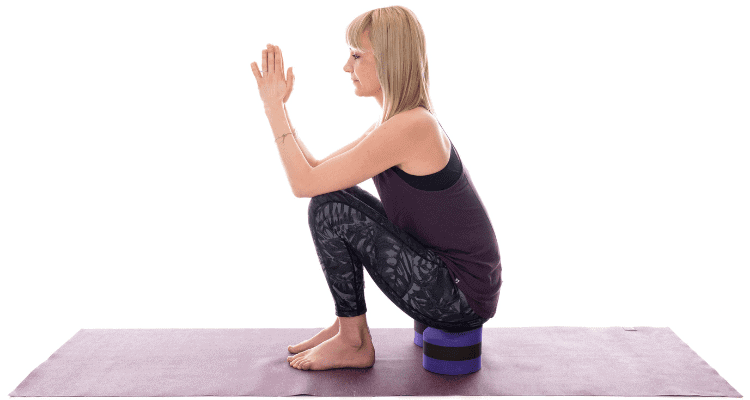
Depending on your flexibility, placing either a Standard for a Tall Buttafly under your buttocks provides a gentle lift, allowing you to settle into the pose without strain or forcing depth. This support helps you maintain an upright chest and natural spinal alignment while reducing pressure on sensitive joints. With your weight partially supported, you’re free to explore hip, knee, and ankle range at your own pace.
The Buttafly’s ergonomic design promotes a sense of grounding and balance, making it easier to relax, breathe deeply, and remain present.
Lift your heels
For a second variation, try placing a Standard Buttafly under your heels.
Feel free to explore both this one and supporting your seat, and notice how each variation feels. Enjoy discovering the subtle differences in support, comfort, and ease.
Lifestyle medicine with Loulou James
Pioneering mind-body integration
As a former Physical Therapist and creator of the innovative Buttafly, I offer a groundbreaking approach that transcends traditional therapy. My consultations blend rigorous scientific understanding with evidence-based mind-body approaches, offering something genuinely different for those seeking real transformation.
These dynamic 1:1 sessions unite the precision of Lifestyle Prescriptions® Health Coaching with specialised Buttafly guidance and deep spinal health expertise. Together, we'll uncover your body's unique story and develop powerful strategies that go beyond conventional approaches to create lasting comfort and vitality.
Each consultation is precisely tailored to your journey, whether you're seeking to decode body-mind connections, learn how to tap into your body's natural healing capacity, or discover a new approach to spinal health. This isn't just another therapy session – it's a pioneering pathway to understanding and transforming your well-being.