
A simple guide to beginning your practice at home.
Before you begin
If you’re seeking relief from discomfort, improved posture, or support for a calmer nervous system, the Buttafly Technique offers a practical way to work with your body at home.
The aim of the Technique is not to force change, but to create the right conditions for the body to soften, settle, and organise itself more naturally.
Because the quality of the experience depends on set-up, small adjustments can make a significant difference. For this reason, many people choose to begin with personalised guidance to help them feel confident in how the Technique is intended to work.

How to use this guide
The following steps will show you how to set up the Buttafly safely and comfortably at home.
Take your time. The process should feel steady, unhurried, and supported throughout.
Comfort is always your primary guide.
If anything feels unclear, or if you would like help refining the set-up, a consultation is available to support you.
Step 1
Settling

Find a quiet, comfortable spot and have your Standard Buttafly and other props nearby.
Lie on your back.
If possible, extend your legs. If not comfortable, bend your knees and support them with pillows.
Let your arms rest wherever feels comfortable.
Support your head and neck for comfort.
Take a few moments to notice how your body is making contact with the floor.
There is nothing to change at this stage — only notice.
Step 2
Position the Buttafly

Place one or two pillows under your knees if you haven’t done so already.
Hold it in one hand so you can read the logo.
Bend your knees, placing your feet on the floor or on the pillows.
Press gently through your feet to lift your pelvis into a bridge position.
Slide the Buttafly under the thighs so it sits under the lower half of your buttocks.
Keep hold of the Buttafly while you lower your buttocks carefully so that your sacrum and tailbone are suspended within the indent of the Buttafly.
Extend your legs one at a time, adjusting the pillows underneath your knees for comfort.
Step 3
Fine-tune for comfort
Bring awareness to your lower back.
If your lower back feels over-arched, move the Buttafly down a little and/or add more support under your knees.
If your lower back feels collapsed, move the Buttafly up a little and/or reduce the knee support. Comfort is the guiding principle.
Always ensure at least some support under the knees.
Step 4
Rest and relax

Remain in position for as long as feels right for you.
Make small adjustments whenever needed so that you can fully relax.
There is no fixed requirement for time - your body will guide the duration.
Step 5
Coming out of position
When you're ready, bend your knees, and lift your pelvis.
Remove the Buttafly.
Lower your pelvis and extend your legs, keeping or removing the pillows as feels comfortable.
Take your time.
Step 6
Integration
Remain resting for 10-15 minutes if possible.
This integration phase is an important part of the process and supports the body.
When you’re ready, roll gently onto your side, and pause there for a moment before using your hands to return to sitting.
Important guidance for safe practice
The Buttafly Technique should always feel comfortable and supported. Your experience of ease is the most important guide.
If you experience any new or unusual symptoms such as pain, numbness, tingling, or pins and needles, stop and rest. If symptoms persist, seek appropriate professional advice.
When to seek advice before beginning
If you have a known serious medical condition or are currently under active medical care, it is advisable to seek guidance before starting, including conditions such as:
- Acute spinal injury
- Spinal instability or fracture
- Recent stroke, intracranial haemorrhage, or aneurysm
- Recent head injury or conditions involving increased intracranial pressure
- Severe inflammatory or systemic conditions affecting the spine
Pregnancy
The Buttafly Technique is gentle and may be adapted during pregnancy.
If you are pregnant and would like reassurance about set-up or positioning, a consultation is recommended so you can begin with confidence.
Equipment checklist
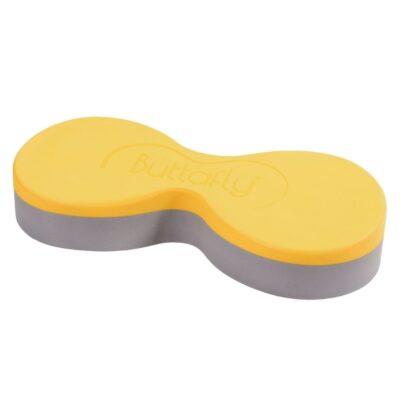
How long and how often?
Many people begin with 10–20 minutes and adjust according to comfort.
There is no fixed protocol — consistency and ease are more important than duration.
If you would like support developing a practice that suits your body, a consultation can help you refine this.
Refining your experience
The Technique Buttafly is simple, but precision matters: the quality of the experience depends on how it is set up.
Many people are able to follow the steps and begin their practice independently. Others find that a small adjustment in positioning, support, or understanding of the set-up completely changes how the Technique feels in their body.
In my experience, when the set-up is accurate and the body feels safe, people are more likely to experience the intended effect of the Technique — ease, settling, and natural reorganisation.
If you would like reassurance, or if you are not yet experiencing the level of comfort or change you hope for, a consultation with Loulou James can help you refine your set-up and build confidence in your practice.
Even experienced practitioners often find that guided set-up reveals a level of precision they would not reach alone.

"The body has a deep intelligence and the capacity to bring itself back into balance. That said, we rarely, if at all, consider how this applies to the spine and posture. But it does, and the Buttafly Technique harnesses it beautifully.”
— Loulou James, MCSP
Spine Health Specialist with 30 years of physiotherapy experience and creator of the Buttafly.